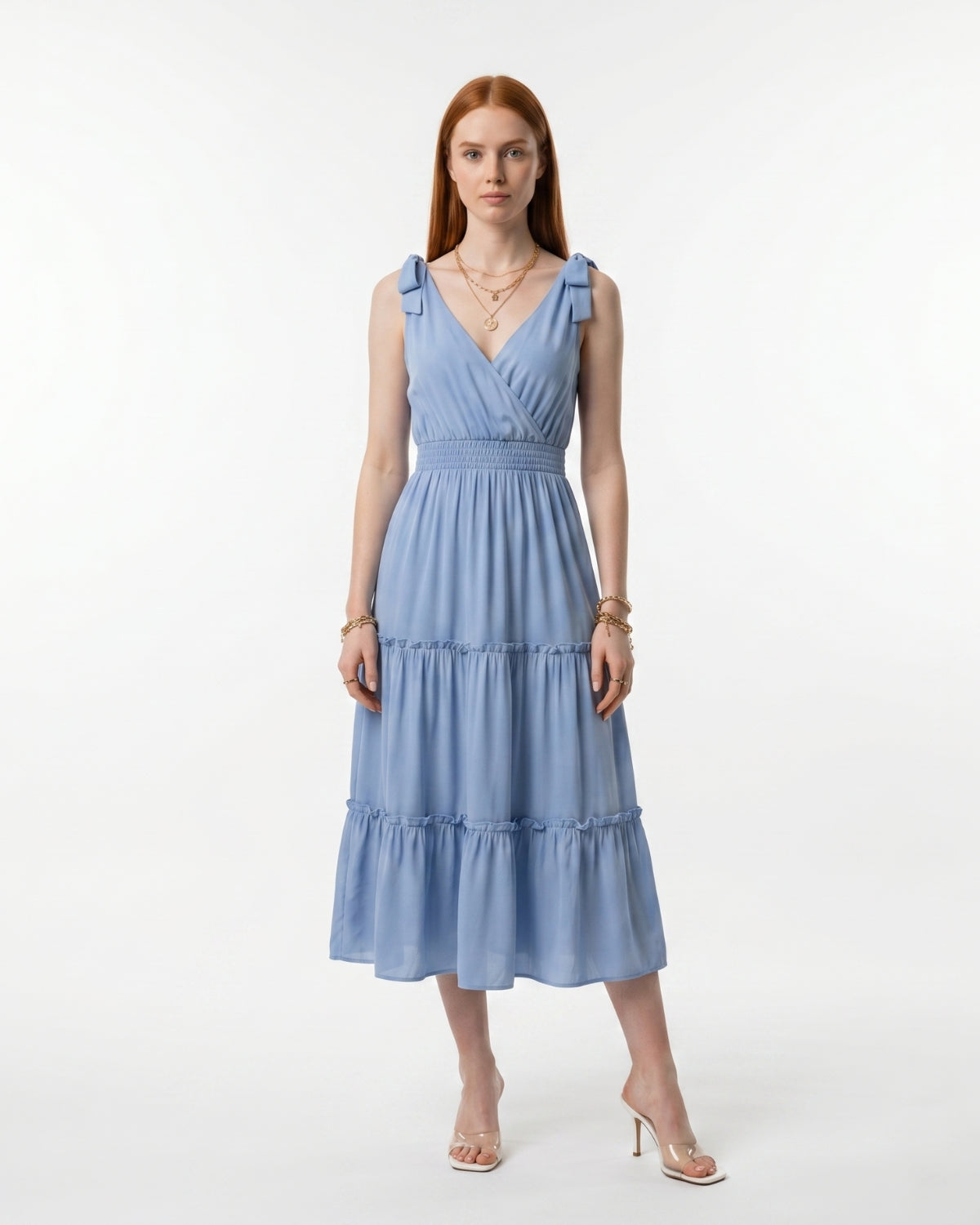
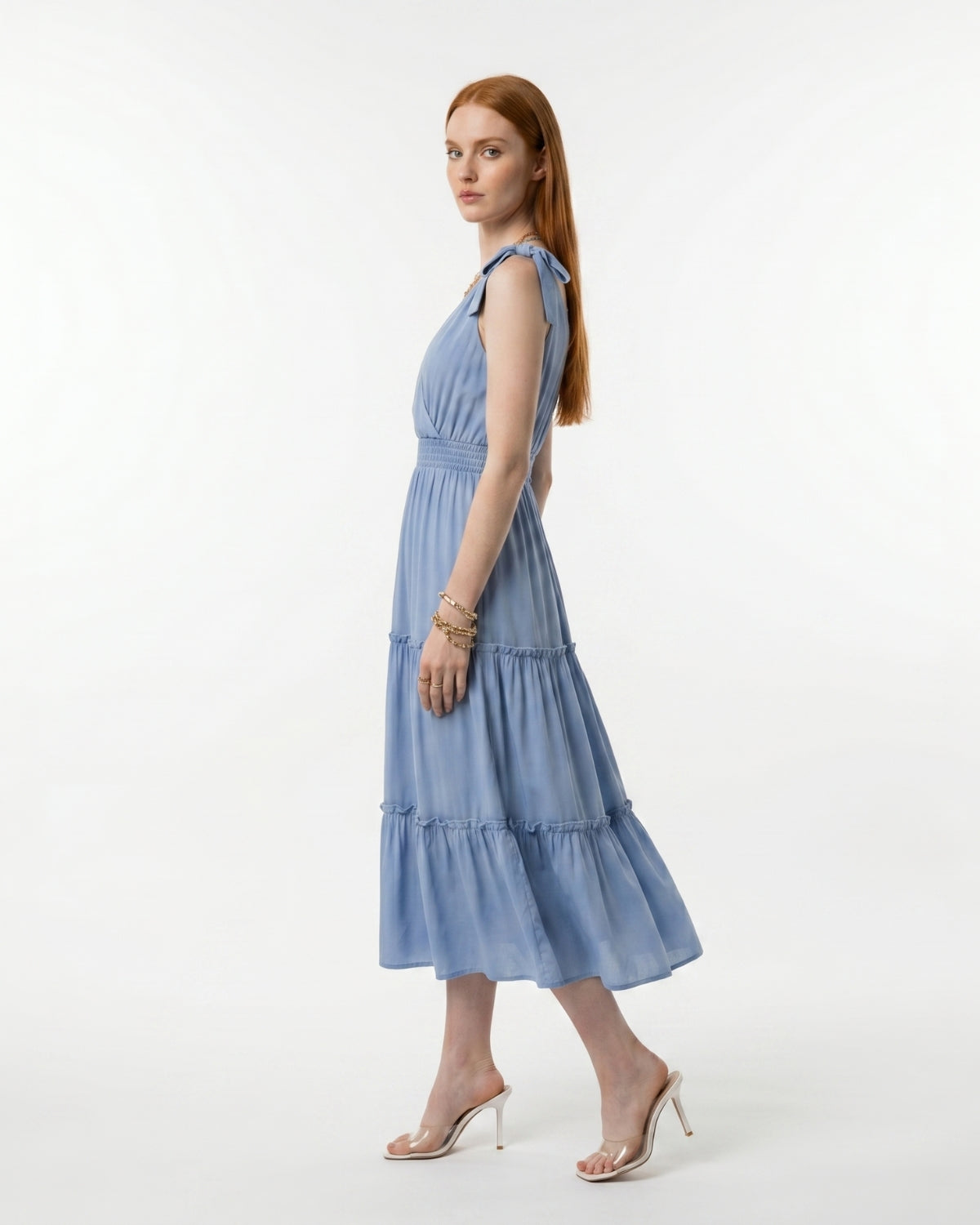
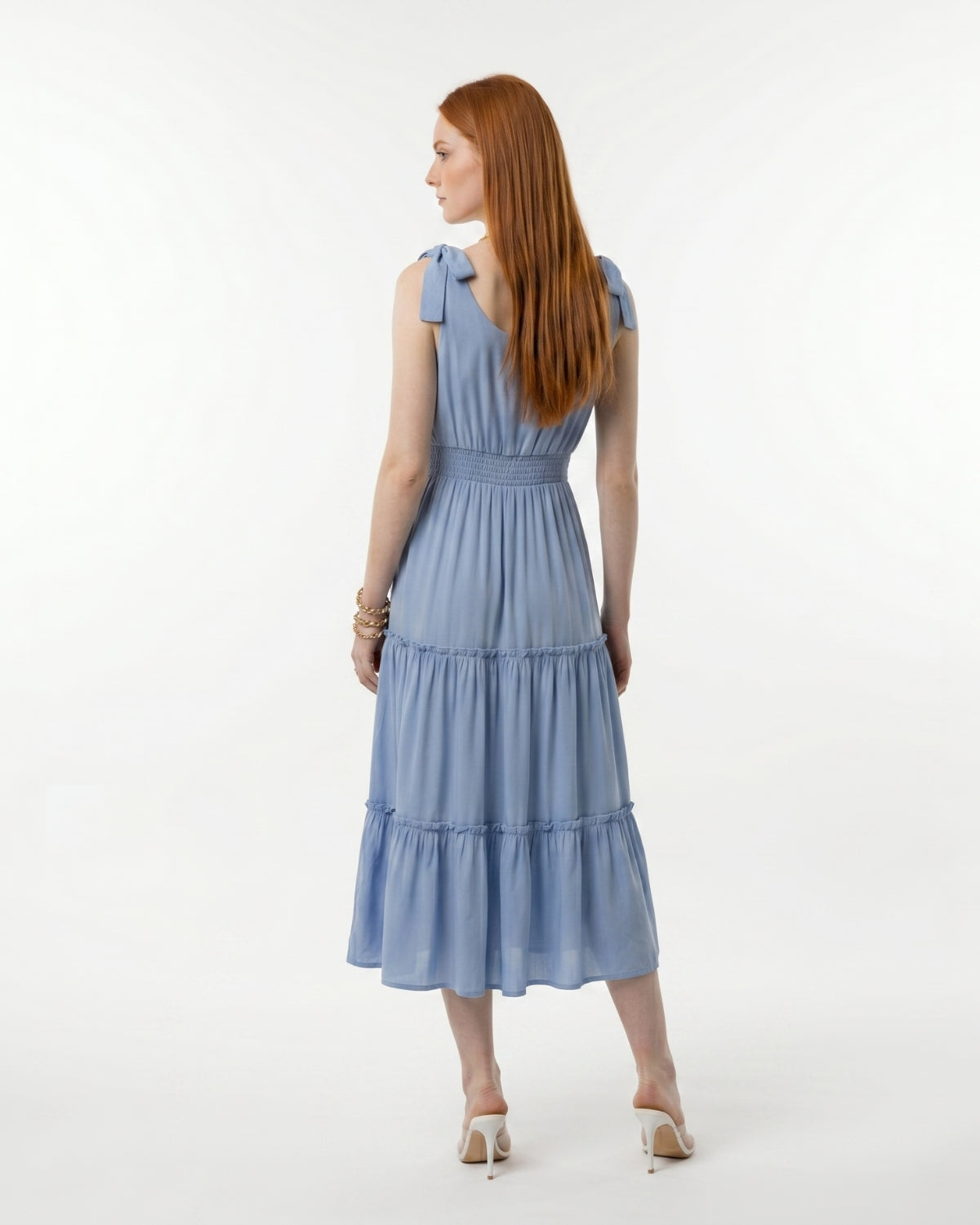
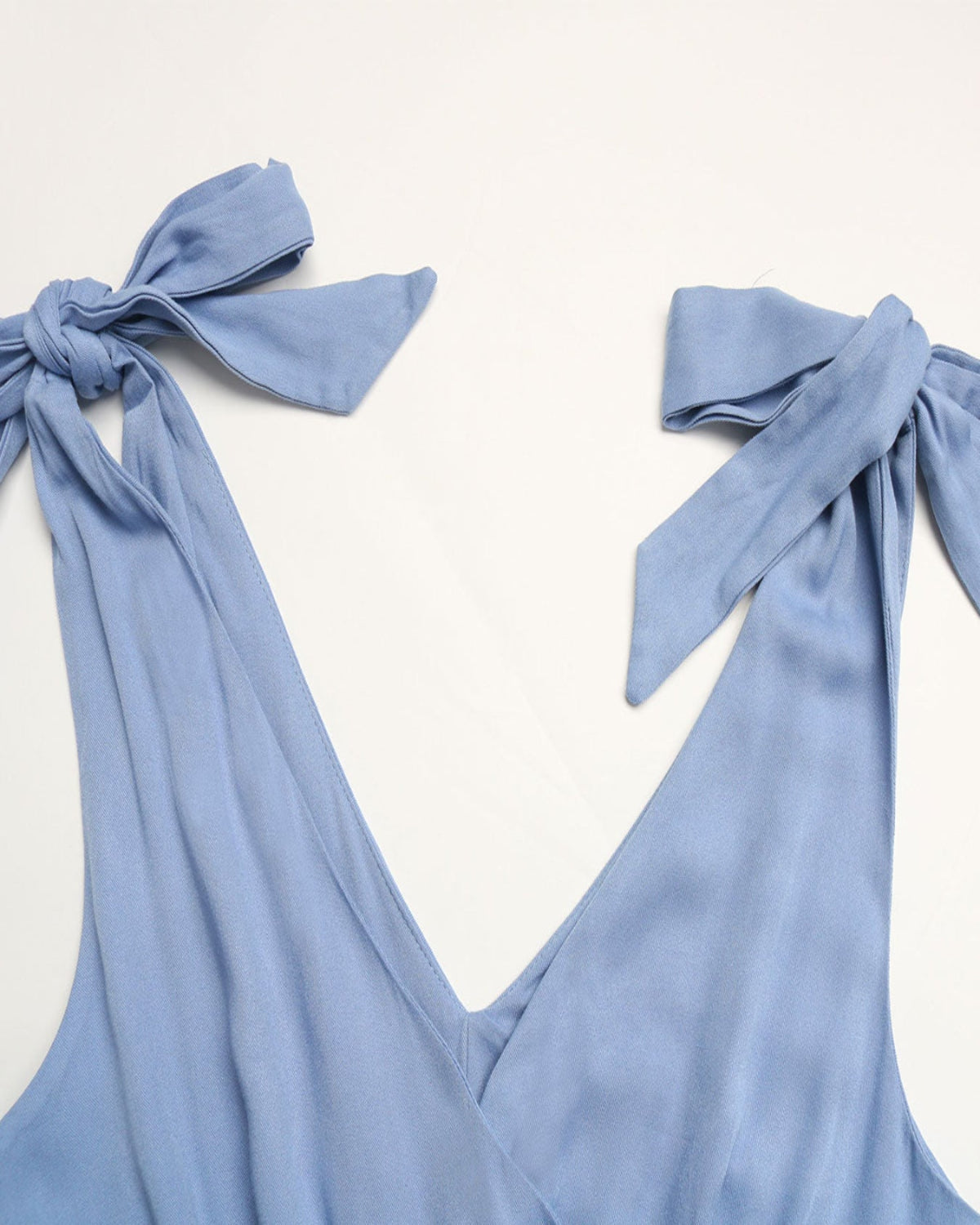
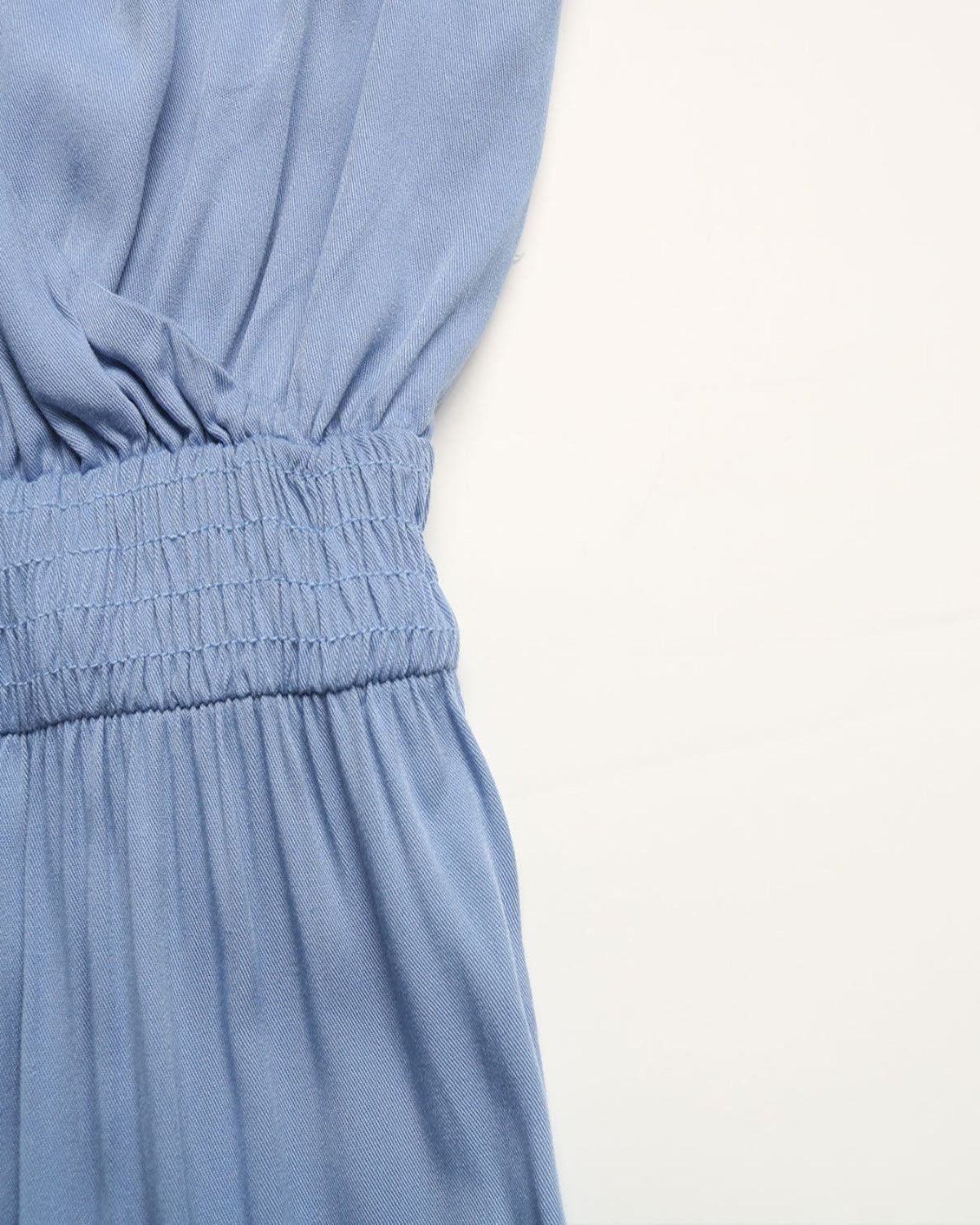
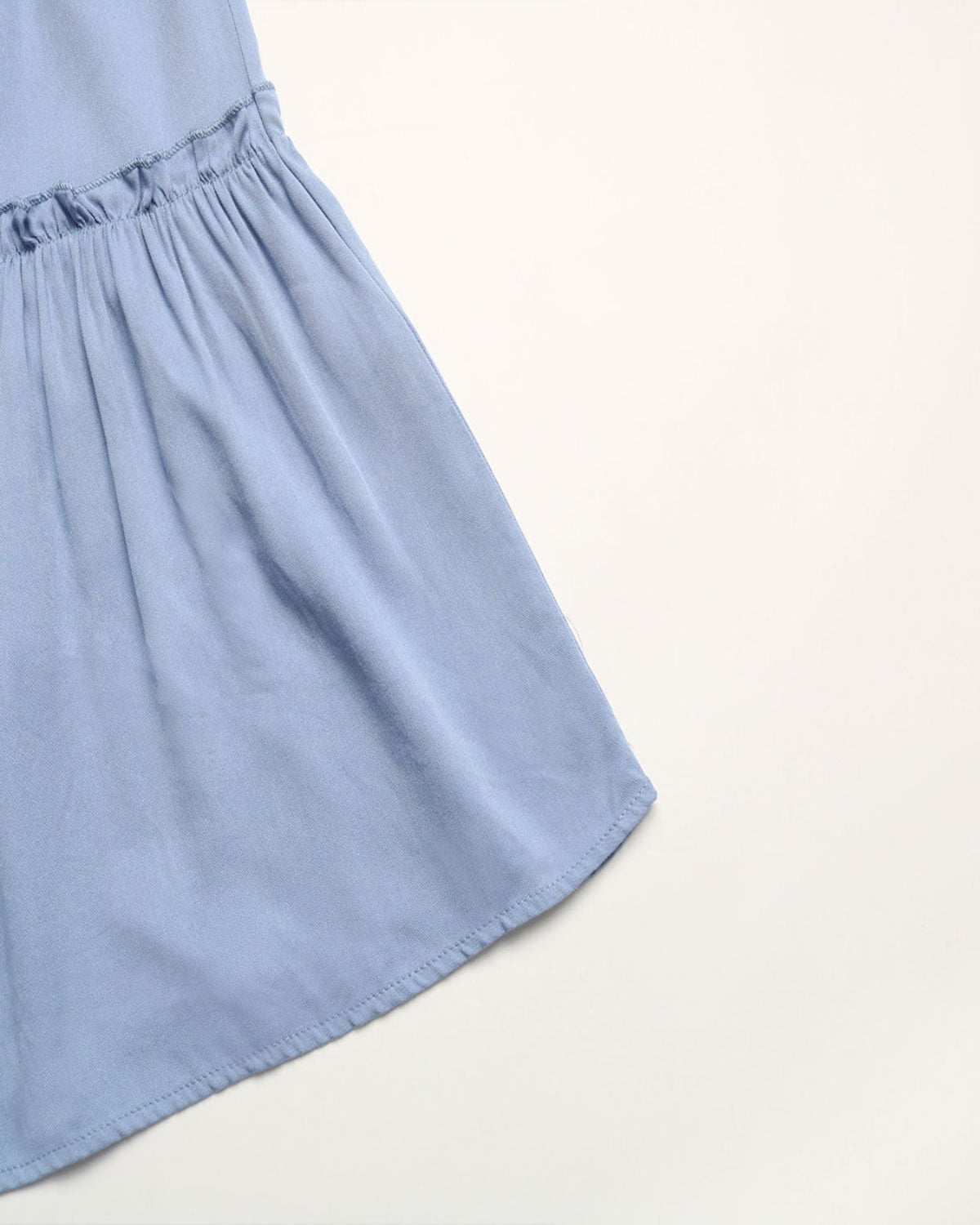
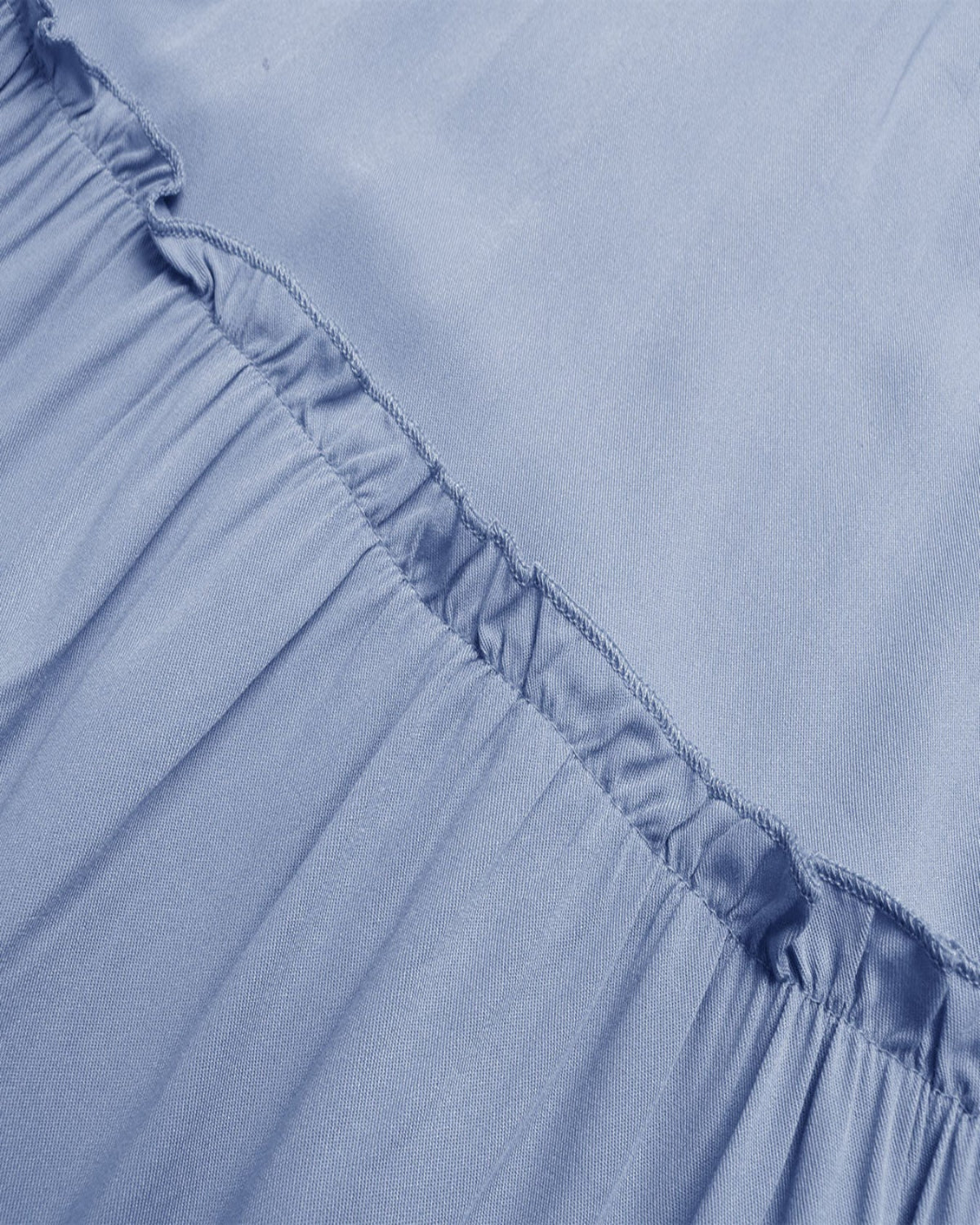
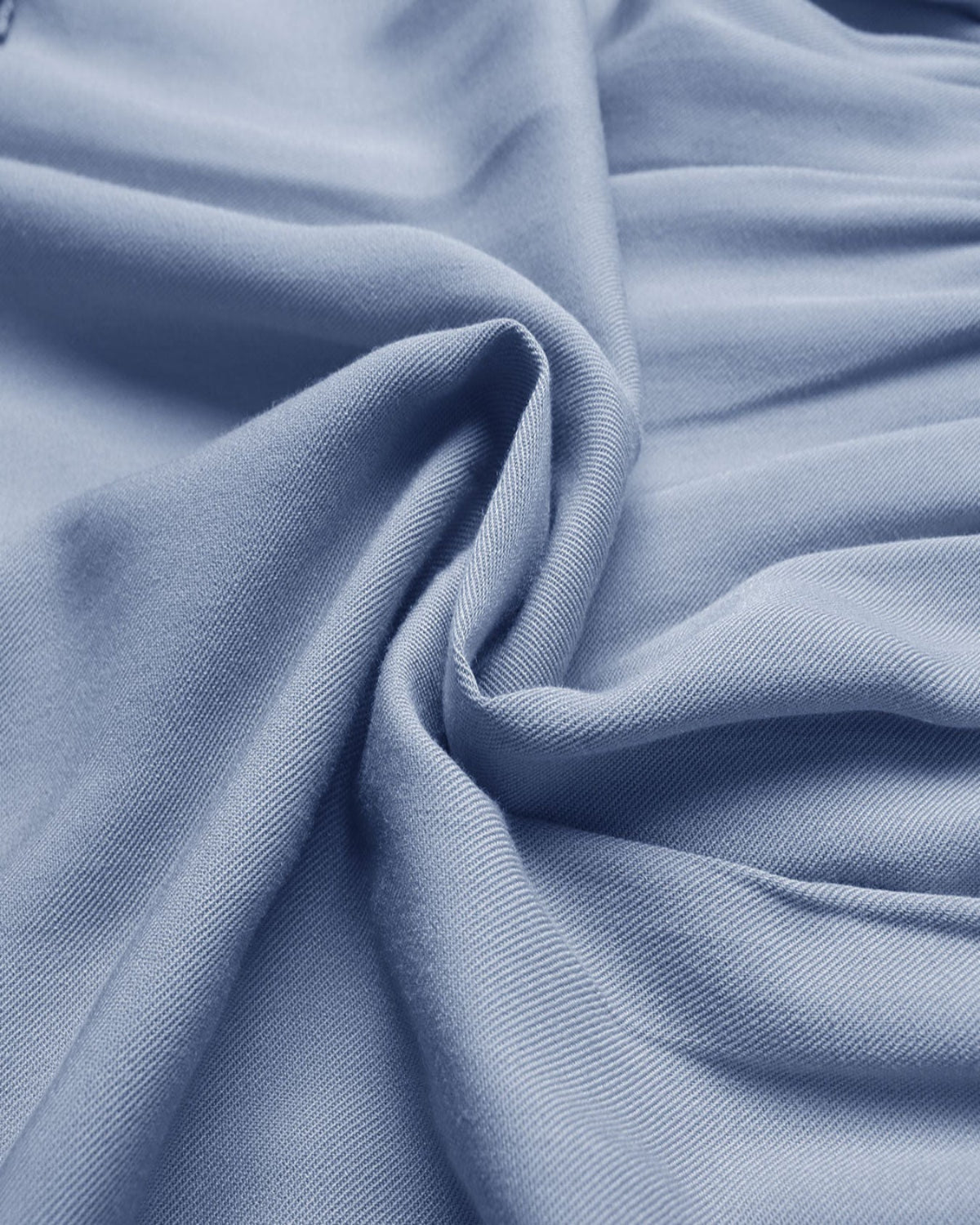
Speranza Midi Dress
- Midi length
- Surplice V-neckline
- Long self-tie shoulder straps that knot into soft bows
- A-line tiered silhouette
- Shirred elasticated waistband at the natural waist
- Frilled gathered tier seams
- Pull-on style
- Non-sheer, unlined
✓ Less puffy in about 2 minutes
✓ Warm brass boosts circulation
✓ Red light for a fresh, lit look
Apply a few drops of facial oil or serum to clean skin so the brass glides.
Press and hold to power on. Tap to cycle through heat, vibration and red light - each runs on its own or together.
Start at the collarbone, sweeping down and out toward the shoulder, five strokes each side. Move up the neck, then the jaw (chin toward ear), the cheeks (nose toward temple), and the forehead (centre outward). Finish back at the collarbone.
Two minutes, once a day. Start on the lowest heat and vibration settings and work up as you get used to it.
Selvagio Electric Gua Sha, USB-C charging cable, and a printed guide to the two-minute routine.
Charges in about two hours from empty. Ninety minutes of runtime - roughly six weeks of daily use between charges.
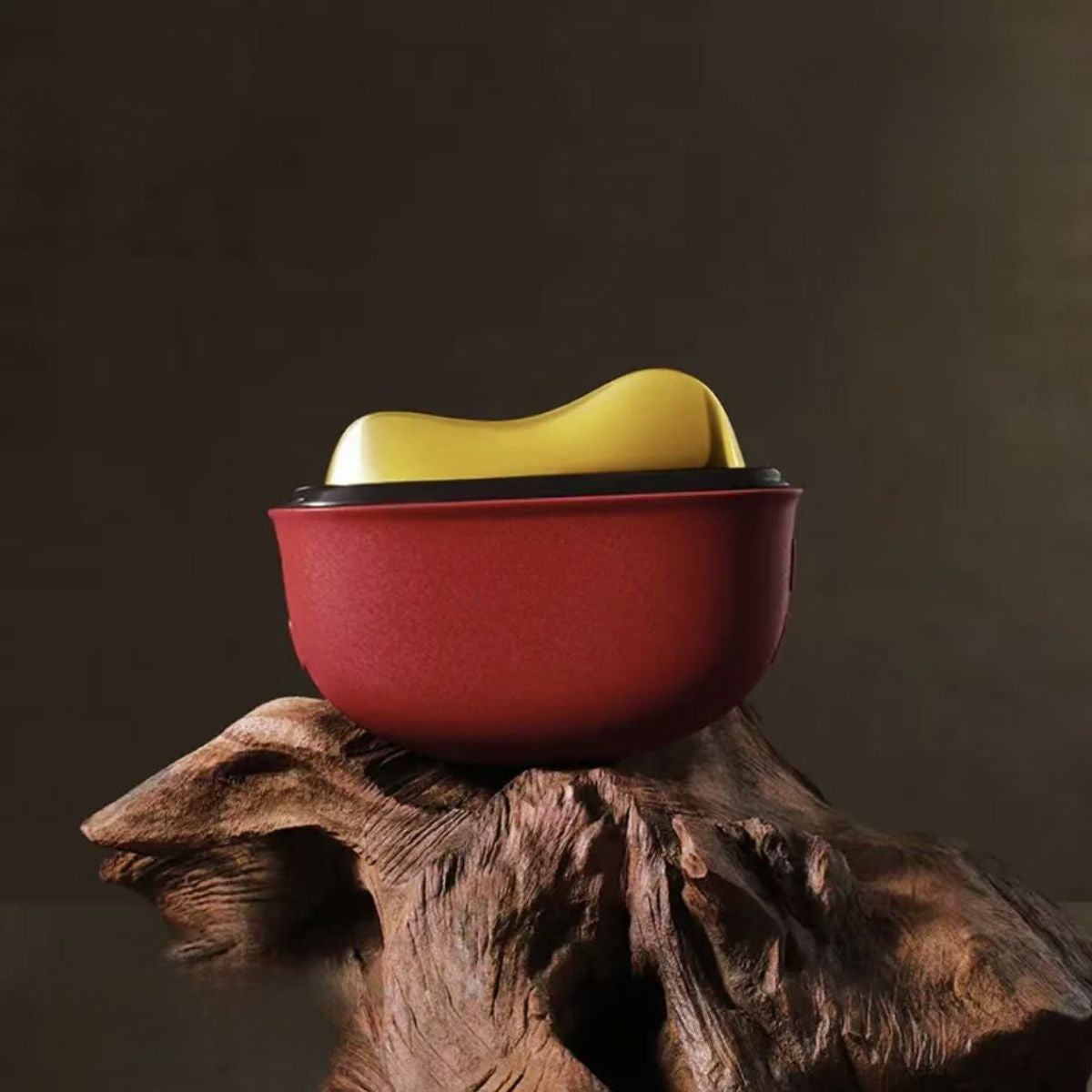
That gold head isn't a finish. It's the heating element. Brass comes up to temperature in seconds and holds it evenly across the whole contact surface, at three levels from 35–40°C (95–104°F) for around the eyes up to 45–50°C (113–122°F) for the neck and shoulders. Warm skin gives, so the edge glides through a stroke instead of dragging at it - the difference between a massage and a scrape. You'll feel it on the second pass.
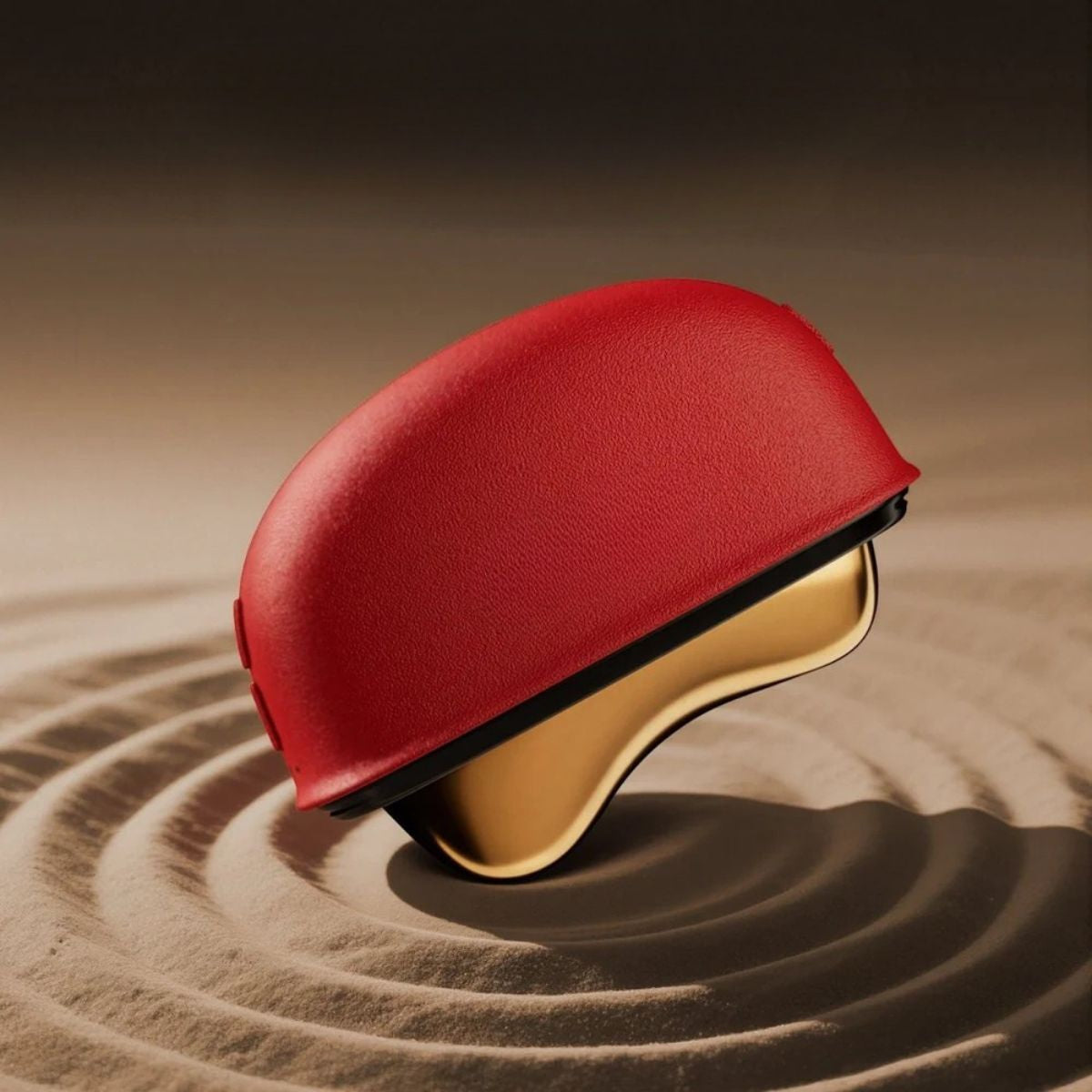
Your hands are the weak point in gua sha. They tire about forty seconds in and the pressure drifts, so a steady pulse through the brass holds it for you instead - three intensities, soft enough for under the eyes at Level 1, firm enough at Level 3 to keep going on your neck and shoulders. Every stroke does the same work as the first one, whether it's your first week or your hundredth. Nothing to concentrate on. That's the point.
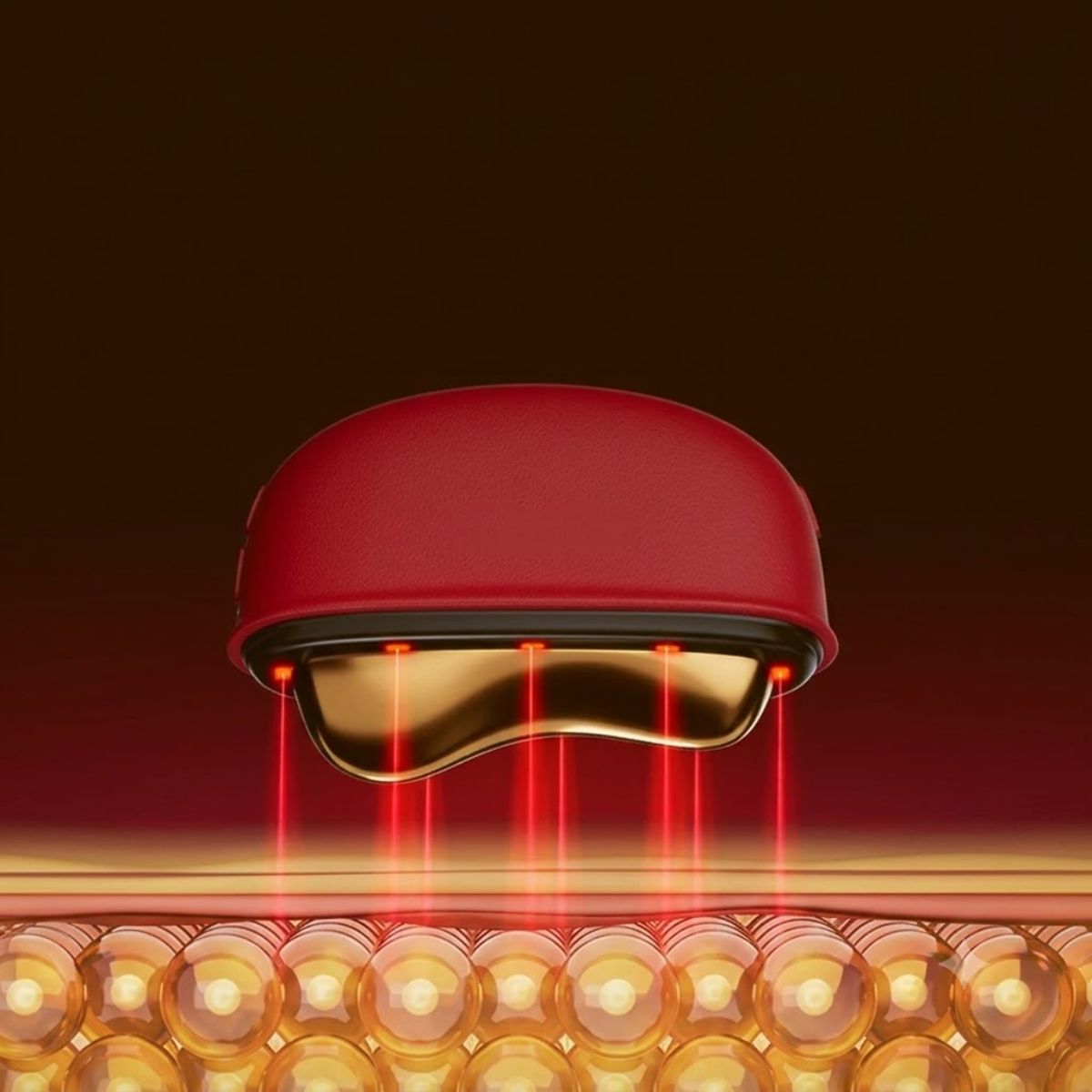
Red light normally means an appointment, or a mask you have to lie still under. Here it's eight LEDs set into the underside of the brass head at roughly 620–640nm, the wavelength used across at-home red light devices, delivered at the skin's surface while you're already massaging. It's an everyday ritual rather than a clinical protocol, and we'd rather say that plainly than oversell it. What you'll notice is a more even-looking finish on the days you actually use it.
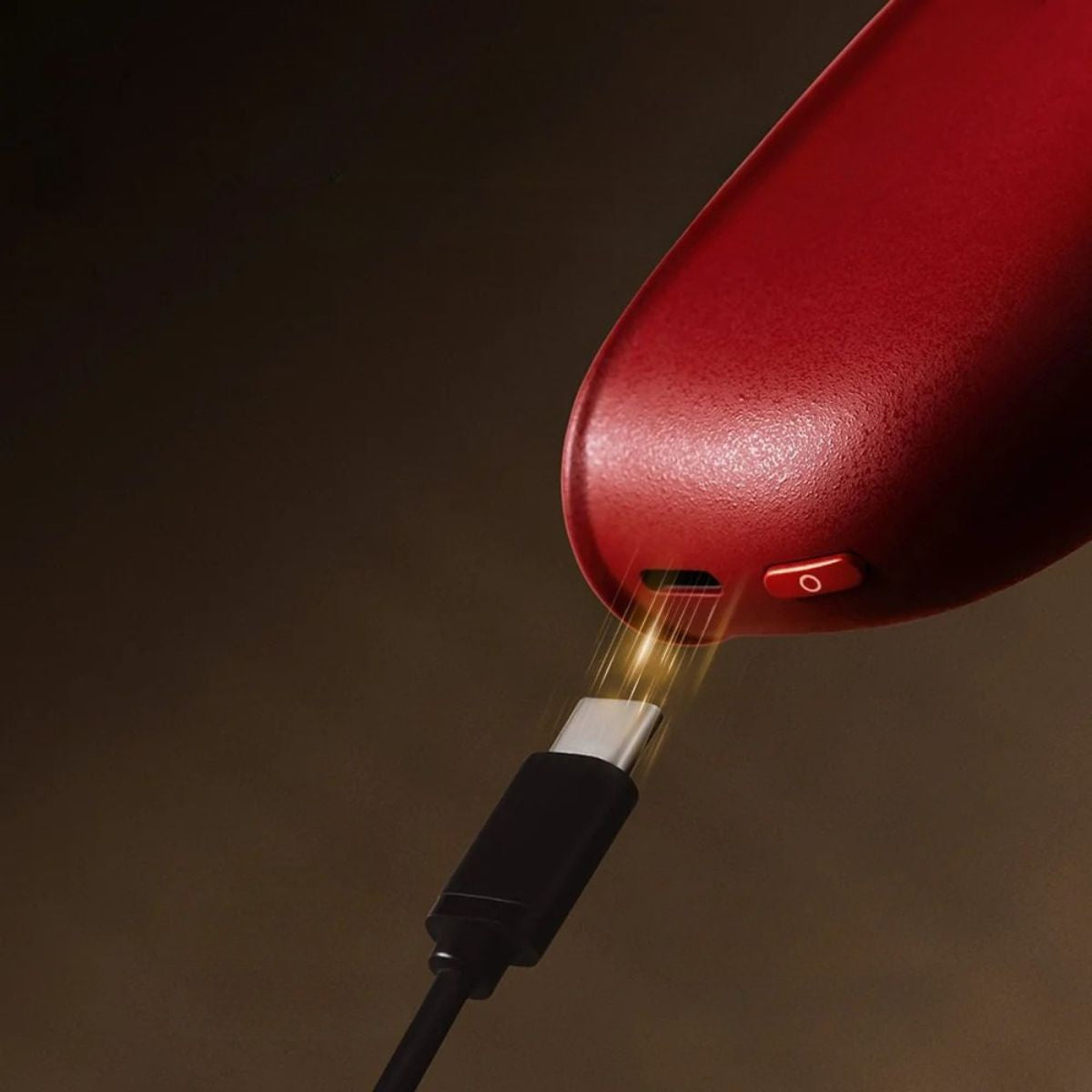
Two minutes a day, ninety minutes in the base. That's roughly six weeks of mornings between charges, over USB-C - the cable already on your nightstand - at 174g (6.1oz), light enough to live in a carry-on without you noticing it's there. A fifteen-minute auto shut-off catches it if you get distracted mid-routine. Which you will.
That gold head isn't a finish. It's the heating element. Brass comes up to temperature in seconds and holds it evenly across the whole contact surface, at three levels from 35–40°C (95–104°F) for around the eyes up to 45–50°C (113–122°F) for the neck and shoulders. Warm skin gives, so the edge glides through a stroke instead of dragging at it - the difference between a massage and a scrape. You'll feel it on the second pass.
Your hands are the weak point in gua sha. They tire about forty seconds in and the pressure drifts, so a steady pulse through the brass holds it for you instead - three intensities, soft enough for under the eyes at Level 1, firm enough at Level 3 to keep going on your neck and shoulders. Every stroke does the same work as the first one, whether it's your first week or your hundredth. Nothing to concentrate on. That's the point.
Red light normally means an appointment, or a mask you have to lie still under. Here it's eight LEDs set into the underside of the brass head at roughly 620–640nm, the wavelength used across at-home red light devices, delivered at the skin's surface while you're already massaging. It's an everyday ritual rather than a clinical protocol, and we'd rather say that plainly than oversell it. What you'll notice is a more even-looking finish on the days you actually use it.
Two minutes a day, ninety minutes in the base. That's roughly six weeks of mornings between charges, over USB-C - the cable already on your nightstand - at 174g (6.1oz), light enough to live in a carry-on without you noticing it's there. A fifteen-minute auto shut-off catches it if you get distracted mid-routine. Which you will.
FAQs
How is this different from a regular gua sha stone?
A stone depends entirely on you supplying the right pressure and angle every single time. This supplies both. The warmth also means it glides rather than tugging, which matters if your skin is on the reactive side.
Can I use just the red light, without heat or vibration?
Yes. All three functions run independently. Many people use warmth alone in the evening and add red light in the morning.
How hot does it actually get?
Three settings, from 35–40°C (95–104°F) at the lowest up to 45–50°C (113–122°F) at the highest. Start at Level 1 and work up. The highest setting is intended for the neck and shoulders rather than the delicate skin around the eyes.
Is it safe for sensitive skin?
Start at Level 1 heat and Level 1 vibration, always over an oil or serum, and patch-test on the neck first. Avoid active breakouts, broken skin, and anywhere you've had recent injectables.
How do I clean it?
Wipe the brass with a damp cloth after each use - facial oil builds up otherwise. An occasional wipe with 70–75% alcohol keeps it hygienic. Never submerge it.
SEE IT IN ACTION